The women’s all-around final at the Sydney Olympics began at 7:00 p.m. on Thursday, September 21, 2000. Maria Olaru, competing for Romania alongside Simona Amânar and Andreea Răducan, had made a prediction before the competition started. She told her coaches that all three Romanians would make the podium. When Octavian Belu, Romania’s head coach, relayed this to reporters afterward, he added with affectionate exasperation: “She has the instincts of a witch. She scares me. From now on, anyone who wants to win the lottery should ask her what numbers will come up.”
By the end of the night, the witch had been proven right. Răducan stood atop the podium with a score of 38.893, flanked by Amânar (38.642) and Olaru (38.581). It was the first time since the 1960 Rome Olympics that a single nation had swept all three medals in the women’s all-around at the Games.
What Olaru could not predict—what no one in the SuperDome that night could have imagined—was what followed.
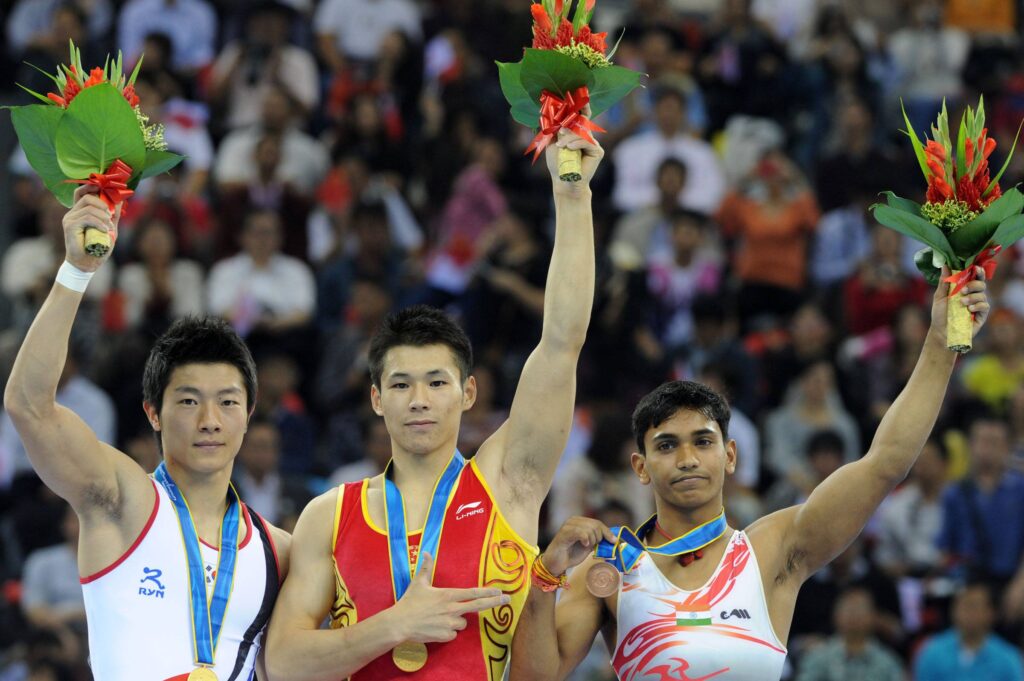
Simona Amânar, Andreea Răducan, and Maria Olaru, 2000 Olympics
In the spring of 1981, People’s Daily ran a glowing profile of Huang Qun, one of China’s most promising young gymnasts. The piece described her as 13 years old — a detail that would later take on significance. If the newspaper was correct, Huang was born in 1968. Yet when she stepped onto the podium at the 1984 Los Angeles Olympics to claim a bronze medal with her team, the official record listed her birth year as 1969. The discrepancy is modest by the standards of Cold War gymnastics, but it is documented in one of China’s own state-run publications, at a moment when there was no reason to misrepresent her age in either direction. The profile below, translated here in full, offers a rare contemporaneous snapshot of Huang Qun at the start of her international career — and another data point in the long history of age falsification in elite gymnastics.
In the summer of 1984, Ecaterina Szabó achieved something that, even in an era of liberal scoring, stood out as exceptional: she recorded two perfect all-around totals of 40.00, months apart and in markedly different competitive settings. The first came in June, at a dual meet against Czechoslovakia in Prague, where Szabó received a 10.00 on all four of her optional routines—a feat that FIG officials publicly acknowledged as unprecedented. The second followed in August at the “40th Anniversary Cup” in Buzău, a domestic competition staged in the afterglow of the Los Angeles Olympics, where she again scored a perfect 40.00.
Here are a few newspaper articles about those competitions.
Ecaterina Szabo, Romania, gold medallist (Photo by S&G/PA Images via Getty Images)
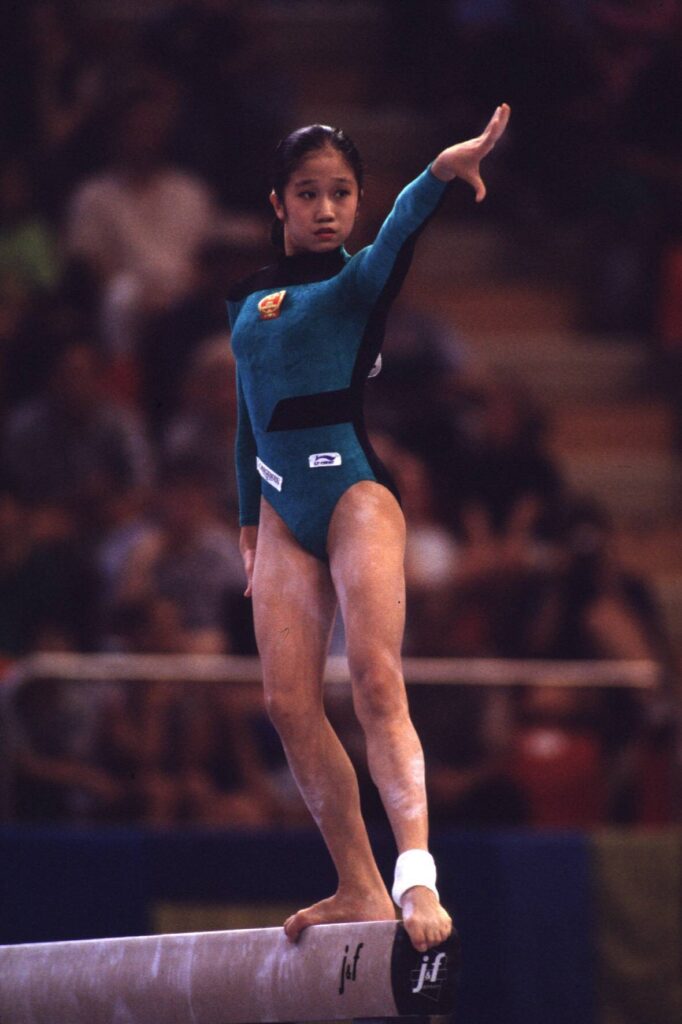
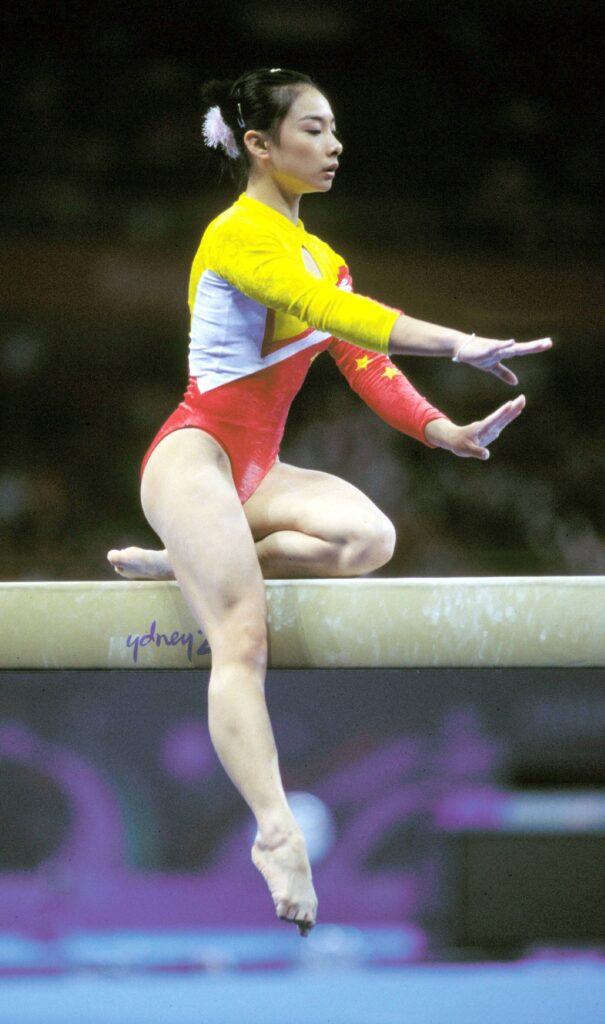
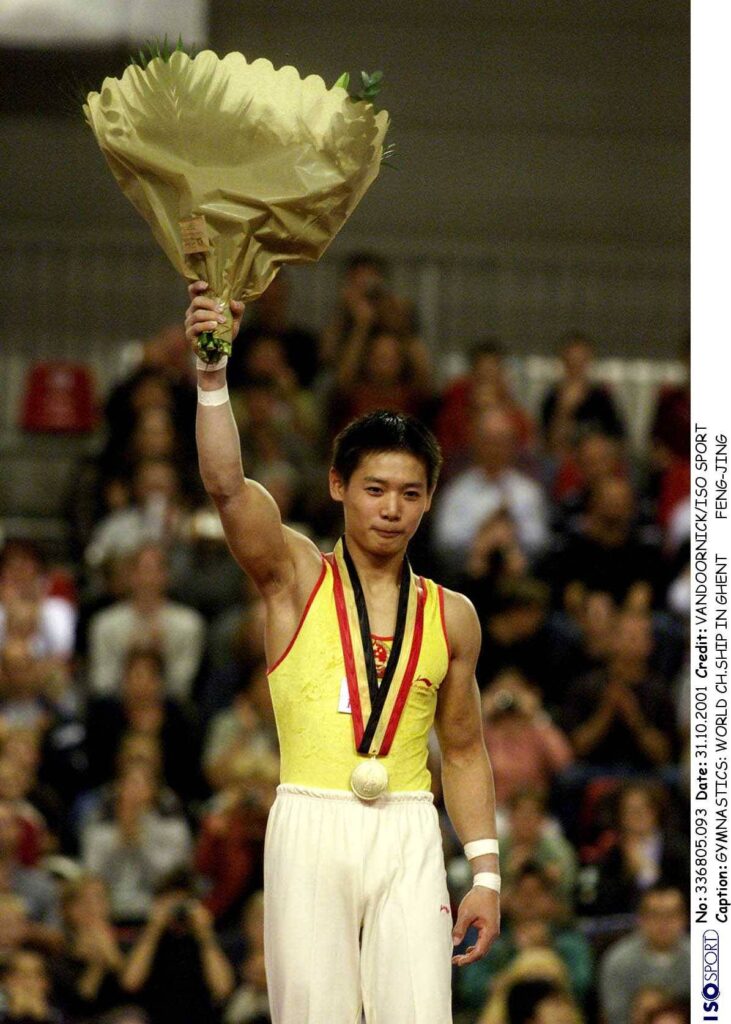
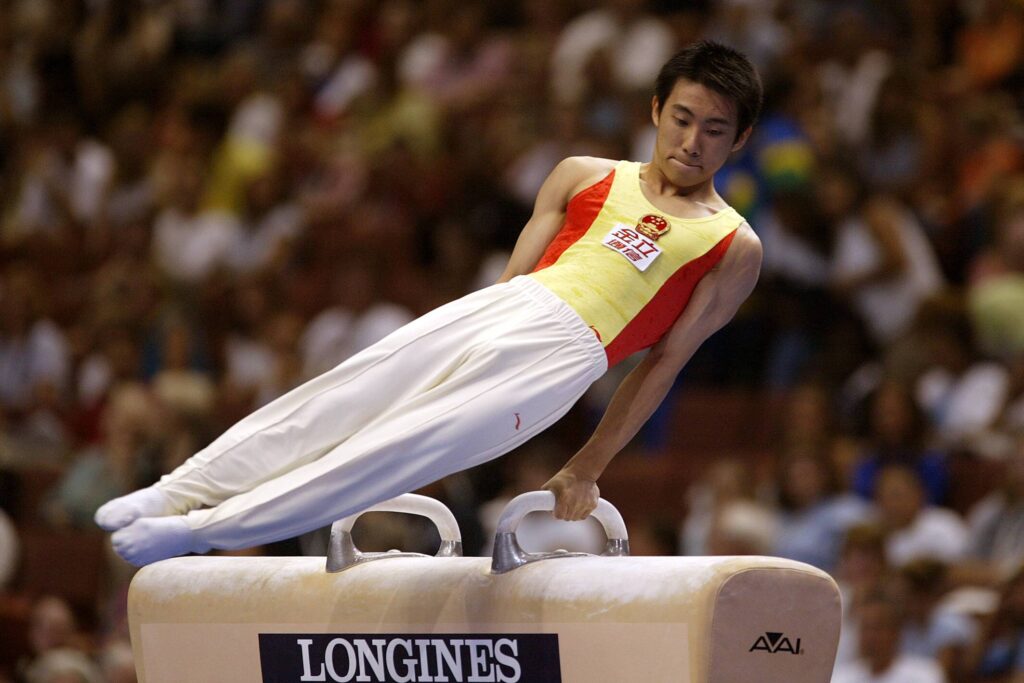
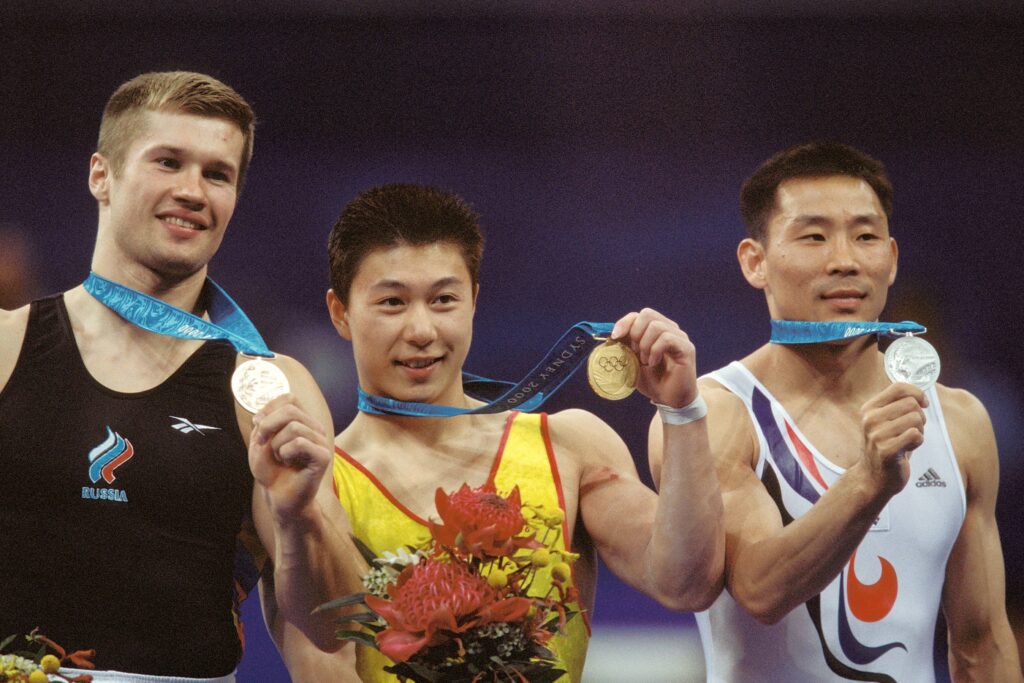
In April 2010, the International Olympic Committee stripped China’s women’s gymnastics team of its bronze medal from the 2000 Sydney Olympics. The decision followed an eight-month investigation by the International Gymnastics Federation (FIG), which concluded that team member Dong Fangxiao had been 14 years old at the Games—two years below the minimum age of 16.
The English-language coverage of the scandal—the discovery of conflicting documents, the investigation, the ruling, and the redistribution of medals—has been extensively documented. Less familiar to English-speaking audiences is how the case unfolded inside China: how state media framed the ruling, how sports officials explained it to the public, and how Chinese journalists and commentators responded.
What emerged was not a single narrative, but a fractured one. Alongside brief, formulaic official statements ran a parallel discussion in China’s press that questioned responsibility, credibility, and the structure of a state-run sports system that governed athletes’ lives long before—and long after—the medal was won.
In September 2014, the International Gymnastics Federation issued a disciplinary notice withdrawing the license of a North Korean gymnast, fining her federation, and annulling her results.
The gymnast was Cha Yeong Hwa (차영화), and once again, the charge was age falsification.
What made the case significant was not the accusation itself—by then, age manipulation was a familiar problem—but how quickly it was detected and how comprehensively it was punished. Compared with earlier North Korean cases, Cha’s discrepancy was smaller. The response was not.
Hong Su Jeong, 1st place; He Ning, 2nd place; Cha Yeong Hwa, 3rd place; Uneven Bars, 2006 Asian Games
Uemura Miki of Japan would eventually take Cha’s third-place spot.
In October 2002, more than two decades after Romania’s women’s gymnastics team won gold in Fort Worth, Rodica Dunca broke a long silence. Speaking to Pro Sport, the former international gymnast described daily life inside the Deva training camp not as a center of excellence, but as a place of hunger, surveillance, fear, and physical coercion. Her testimony names teammates whose faces became global symbols of grace—Nadia Comăneci, Melitta Rühn, Emilia Eberle (Trudi Kollar), Dumitrița Turner, Teodora Ungureanu—and places their medals alongside scenes of beatings, escapes intercepted by the Securitate, and bodies pushed beyond collapse. What Dunca recounts is not a single shocking incident, but a system: one in which control over food, water, movement, pain, and obedience defined her adolescence.
Like Eberhard Gienger, Dunca recalls being given an obscene number of pills and injections; unlike Gienger—who admitted to returning many of them to the pharmacy—she was compelled to take everything she was given. Dunca does not identify the substances involved, making it impossible to determine whether any appeared on the IOC’s banned list. She was competing, moreover, in an era when the FIG did not conduct systematic testing, and when the reliability of the drug controls at the 1980 Olympics remains questionable at best. Even had prohibited substances been involved, a positive test would have been unlikely.
Yet the absence of a positive test is not the absence of a problem. Dunca’s account instead directs attention to the medical regime under which Romanian gymnasts trained and competed. The forced ingestion of dozens of unidentified tablets each day, the routine administration of injections associated with prolonged amenorrhea, and the later emergence of drug dependence—all point to a system of non-therapeutic, coercive medical management that regulated young athletes’ bodies for performance, not health.
Set against official narratives of discipline, sacrifice, and triumph—most famously associated with Béla Károlyi—Dunca’s interview exposes the cost hidden behind the perfect smiles and historic scores. It is a reminder that Romania’s golden era in women’s gymnastics was built not only on innovation and talent, but also on practices that blurred the line between training and punishment, medicine and control, excellence and abuse.
Below, you’ll find a translation of ProSport‘s interview with Dunca from October 26, 2002.
Rodica Dunca (the second gymnast from the left), 1980 Olympics
In August 2006, at the Asian Artistic Gymnastics Championships in Surat, India, Hong Su Jeong stood on the vault podium with a silver medal around her neck. The gold went to her younger sister, Hong Eun Jeong—a result that seemed to mark an early challenge to the sibling hierarchy. Four months later, at the Asian Games in Doha, Qatar, the order reversed. Hong Su Jeong again won silver on vault, but that time, she finished ahead of her younger sister, who took bronze.
The results fit neatly into the story that surrounded them. Hong Su Jeong was cast as the elder sister—more experienced, more seasoned—while Hong Eun Jeong, three years younger, was presented as the promising successor rising in her wake. A profile in the Beijing Evening News in 2006 reinforced the contrast, noting that Hong Su Jeong had trained for nine years, while her younger sister had trained for only six.
The story of two sisters competing together was endearing, and over the years, the math was stable, with the sisters always being three years apart.
But it turned out to be false.
Cheng Fei, 1st place; Hong Su Jeong, 2nd place; Hong Eun Jeong, 3rd place; Asian Games, 2006
Note: Throughout this piece, I’ve bolded Hong Su Jeong’s name to help visually differentiate her name from her younger sisters’ name.
In early January 1993, the International Gymnastics Federation announced a decision that was unprecedented in the sport’s history: the Democratic People’s Republic of Korea’s women’s gymnastics team would be banned from that year’s World Championships in Birmingham. The reason? The federation had entered Kim Gwang Suk into international competition with three different birthdates—October 5, 1974, at the 1989 World Championships; February 15, 1975, at the 1991 Worlds; and February 15, 1976, at the 1992 Barcelona Olympics.
“This is not a case of doping, and under no circumstances is she guilty,” FIG Secretary General Norbert Bueche told reporters in Geneva. “The dates of birth were deliberately falsified by the association. Such actions cannot be tolerated.”
Kim Gwang Suk’s case marked the first time the FIG had publicly exposed and sanctioned age falsification in elite gymnastics, though the practice was widely suspected to have occurred for years. The case revealed both the lengths to which some federations would go to gain a competitive advantage and the challenges international sports bodies faced in enforcing their own age eligibility rules.
Thirty years after Kim Gwang Suk’s competitive career ended, her life is still a mystery. What survives are fragments: competition reports, newspaper descriptions, brief quotations filtered through translators—almost all produced outside North Korea. This essay follows the traces she left on the international stage between 1989 and 1993, as recorded by foreign journalists and officials, and concludes by examining the narrow but consequential precedent her case set for how the FIG would confront age falsification in the years that followed.
In April 1981, a gymnast from Kharkov stepped onto the podium at Leningrad’s Yubileiny Sports Palace and won the USSR Cup in artistic gymnastics. Alla Misnik, training under coach Valentin Shumovsky, announced herself as one of Soviet gymnastics’ brightest new talents. Her uneven bars routine featured what Sovetsky Sport called “a magnificent cascade” of elements—a Tkachev, a Jaeger, clear-hip circles with pirouettes, a double-back dismount—forming what one judge described as “a routine of the future.”
A month later, Misnik traveled to Madrid for the 1981 European Championships. There, the Soviet Union’s leading gymnast did not win. She finished third in the all-around behind East Germany’s Maxi Gnauck and Romania’s Cristina Grigoraș, and earned silver medals on uneven bars and floor exercise. For a debut at a major international championship, the results were impressive.
Yet they were results that required explanation in the Soviet press. Why had the Soviet team failed to win a single gold medal? Internationally, the outcome ignited debates about the direction of women’s gymnastics. Was it really a women’s sport anymore?
What went largely unremarked at the time, however, was a more basic fact: Misnik was too young to be competing in Madrid at all.
In October 1978, gymnasts gathered in Strasbourg, France, for the XIX World Artistic Gymnastics Championships. Among the Bulgarian women was Krassimira Toneva, who, like many gymnasts in the sport’s history, was technically too young to be there. She was born in 1965.